We’ll get started at 18:05
Reverse Engineering
6841 week9
good faith policy
We expect a high standard of professionalism from you at all times while you are taking any of our courses. We expect all students to act in good faith at all times
do this irl its really fun
whoami
- lachlan/melon
- security engineer @ google
- detection eng stuff
- teach
644[357]- may meet some of you next year
where slides
might be on webcms but I dont have access to that ll
shilling
COMP6447 is cool
- DO COMP6447
- DO COMP6447
- DO COMP6447
- DO COMP6447
- DO COMP6447
- DO COMP6447
- DO COMP6447
- DO COMP6447
what is re?
reverse engineering
- “the process of discovering the technological principles of a device, object, or system through analysis of its structure, function, and operation”
- basically, finding out how something works
- we cover reverse engineering x86 binaries (& how to determine their original source code)
why re?
- finding vulns (wargames?)
- malware (what it do)
- breaking drm/keygens (mod 7)
- understanding closed source software
all code is oss if you’re good at re
short aside
before re, what about e?
compilation
how does your code become a binary?

compilation is lossy
- compilers are really smart, and will optimize your bad code into good code
- so the output doesn’t reflect the input 1:1
- you’ll lose context: variable names (not always symbols), comments, #DEFINEs
optimization is the devil
another aside
we’re only talking about C binaries
- you can absolutely reverse other compiled languages: rust, golang, java, even pyc
they’re usually just a lot more tedious
how2re
surely theres an easier way to do this
tooling
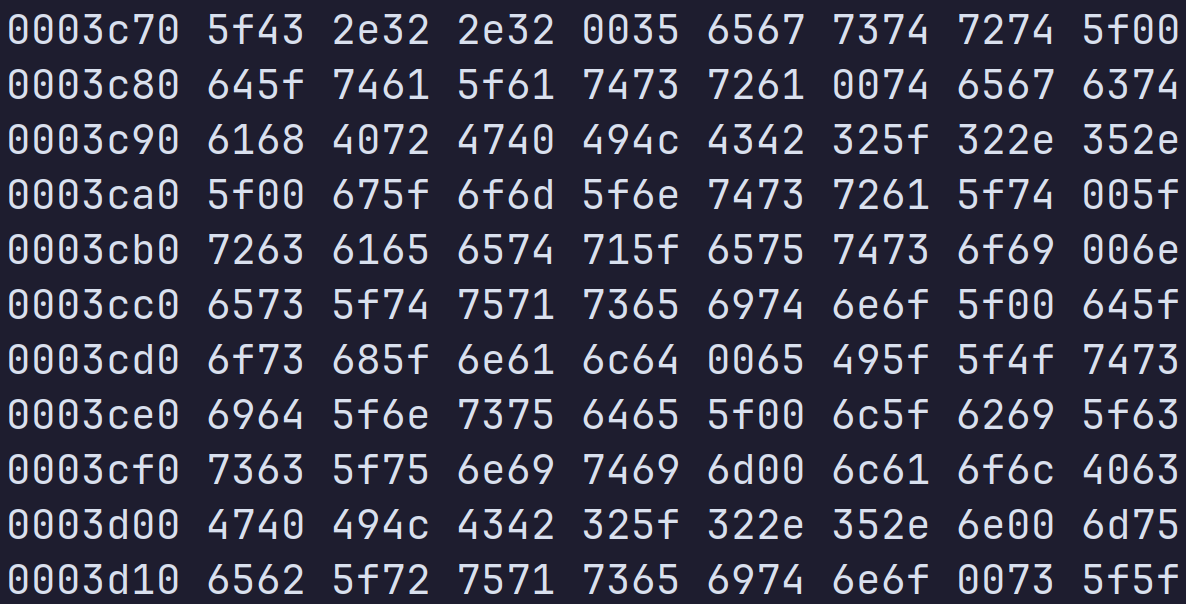
very important to have tools that perform analysis
- static: read the program without running it
- dynamic: show the state of the program as it runs
static analysis
disassembling
- examine an executable without running it
- what instruction do the bytes correspond to?
e.g. ida, ghidra, radare, binary ninja
dynamic analysis
debugging
- examine an executable by running it
- what are the register values at X point in time
- allows you to examine program state as it runs
e.g. gdb, ltrace, strace, windbg
another aside??
im an official:TM: default gdb hater
if you’re using gdb, install an extension e.g. pwndbg, gef, or peda
at a high level
reversing is hard, and takes a lot of time
- don’t focus on every single instruction, try to understand the big picture
- its largely down to pattern recognition
- functions are super helpful (if they aren’t stripped)
what does this do?
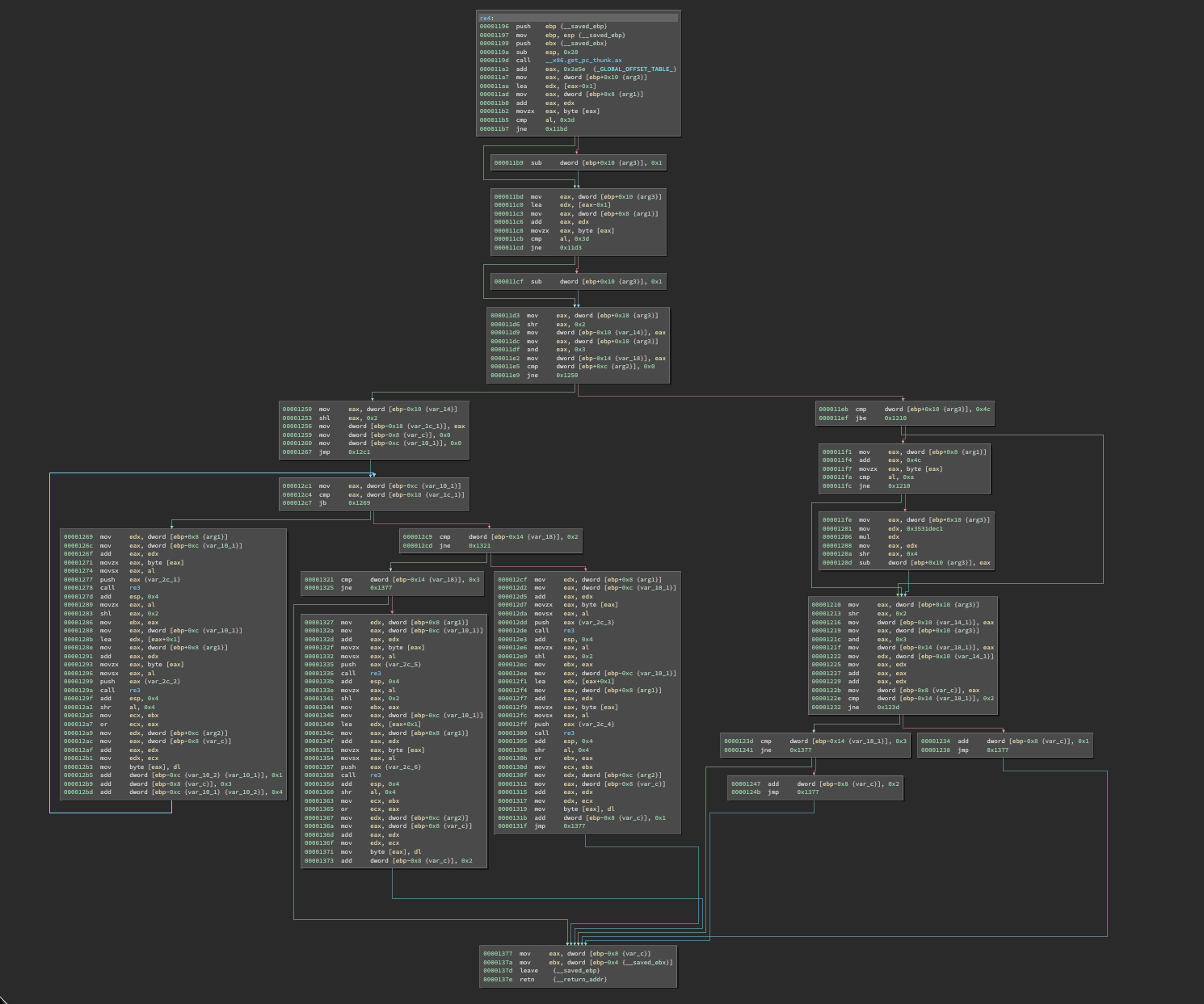
lol idk either
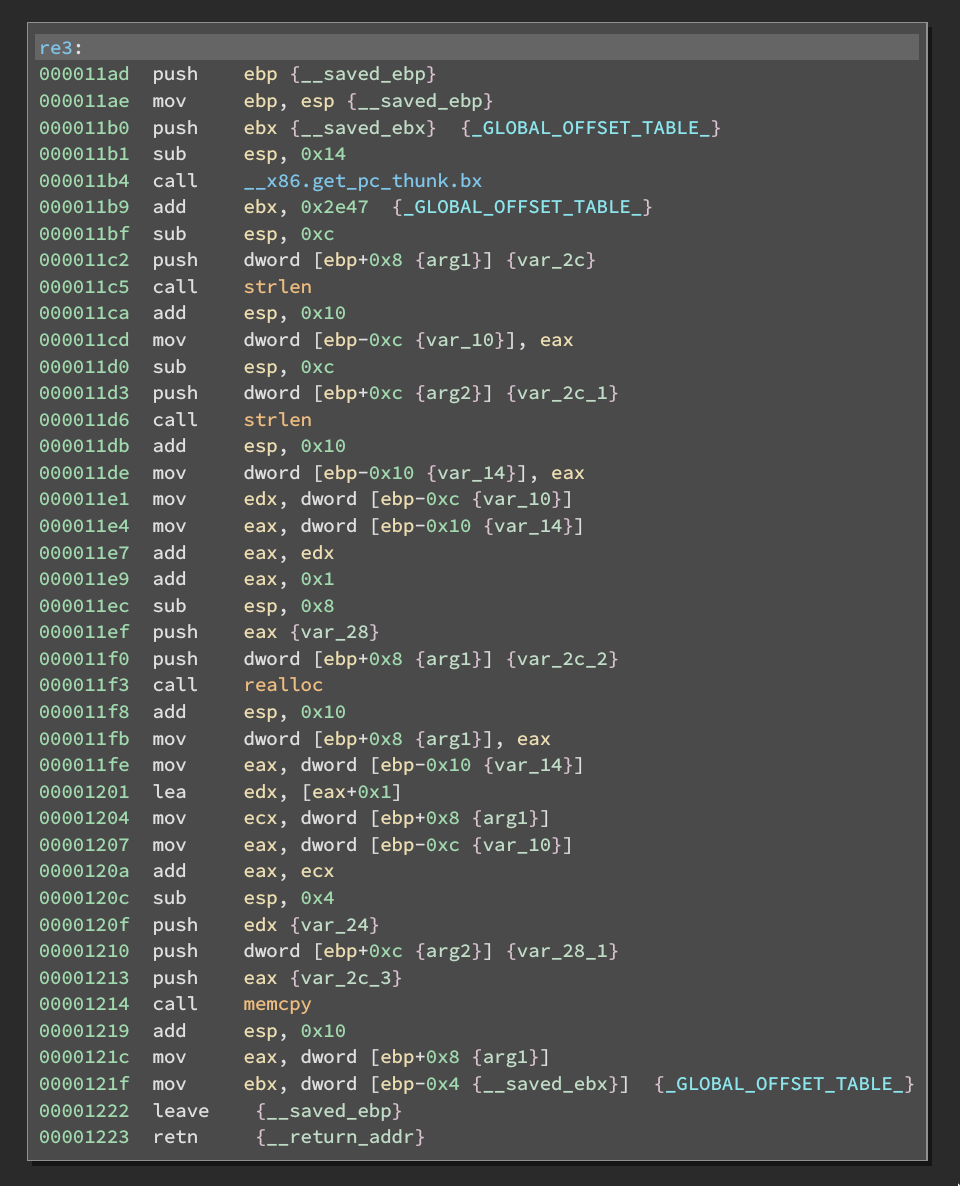
what about this instead?
time for a demo
dont scroll any further
the original code
how close were we?
#include <stdio.h>
#include <stdlib.h>
#include <string.h>

char *re3(char *s1, char *s2) {
    size_t a = strlen(s1);
    size_t b = strlen(s2);

    s1 = realloc(s1, (a + b + 1));

    memcpy(s1 + a, s2, b + 1);

    return s1;
}

int main(void) {
    return 0;
}
a bit deeper
how does assembly work
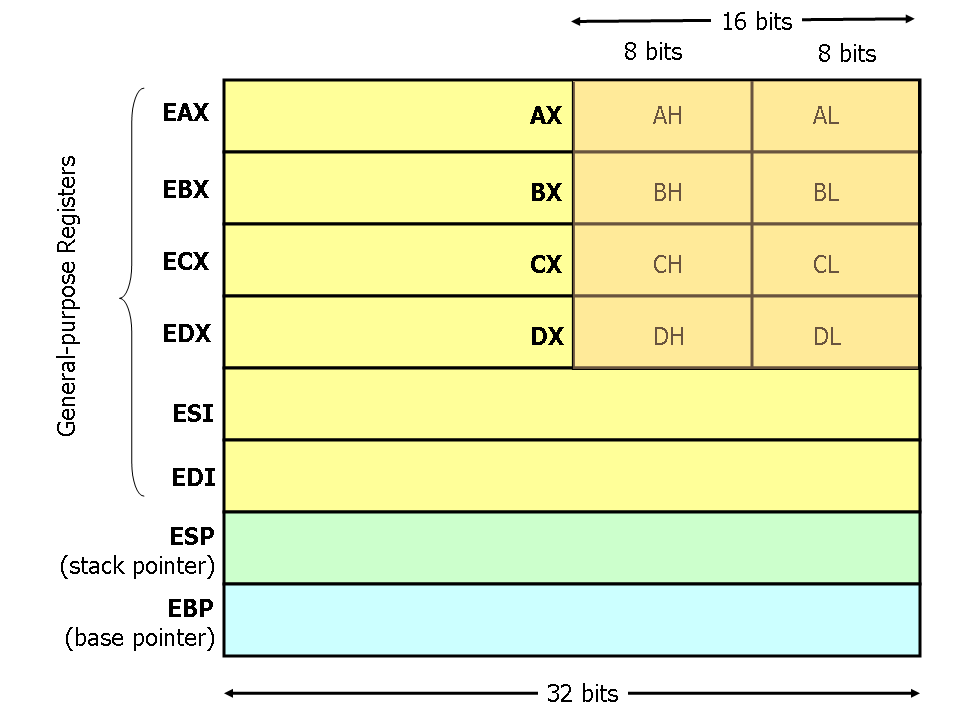
registers
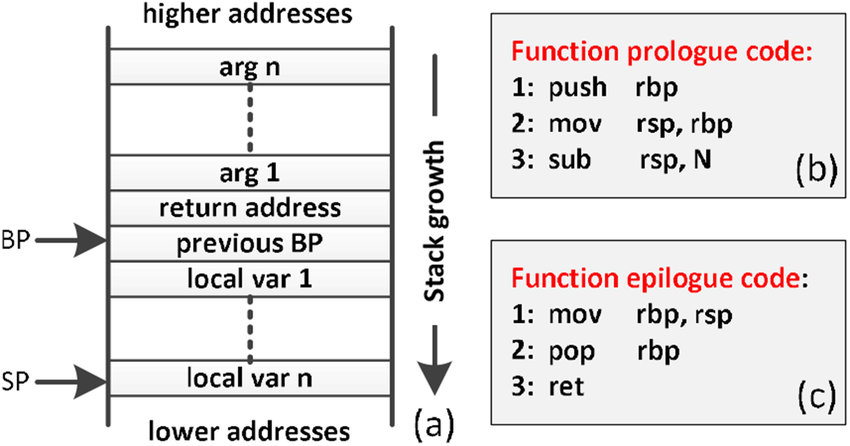
stack frames
calling conventions
x86 uses the cdecl calling convention
- parameters are passed on the stack
- return value stored in eax
- caller allocs args/eip, callee ebp/locals
- callee also cleans up its args
its just convention, not guaranteed. not everything uses it
callee cleans up args
function(x, y, z):
push z
push y
push x
call function
add esp, 0xC
assembly
the stack grows down
- the stack grows from high address to low addresses
- so the top of the stack, is lower down in memory
- ebp points to the base of the frame (higher in memory)
- esp points to the top of the frame (lower in memory)
stack frames
basic example
    0x30  [   ARGS   ] <- parameters
    0x28  [    EIP   ] <- stored return pointer
    0x20  [    EBP   ] <- stored frame pointer
    0x18  [ AAAAAAAA ] <- local vars
    0x10  [ 00000000 ] <- an int?
    0x08  [ DEADBEEF ] <- a pointer
    0x00  [ 59454554 ] <- 4 characters
variables
referenced in relation to ebp e.g. ebp-0x4
- local vars are
abovelower, soebp-0x4 - arguments are
belowhigher soebp+0x8
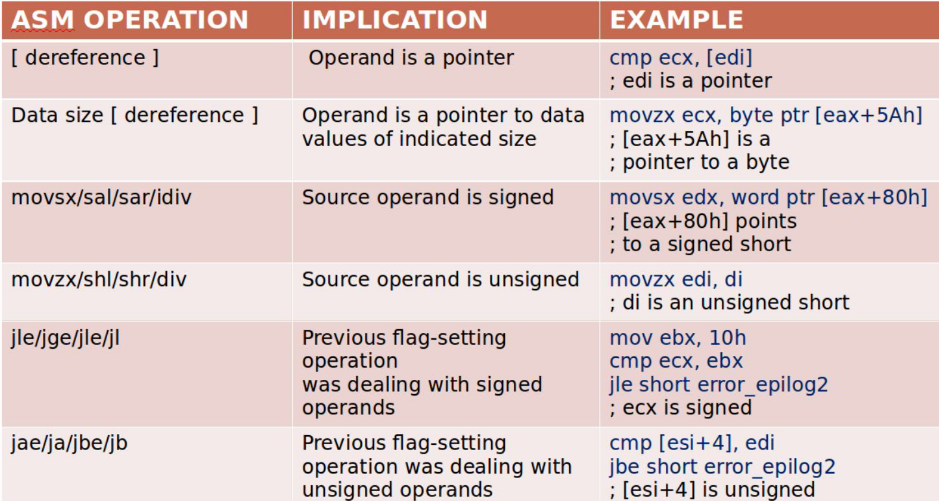
what are the variables used for
instructions give context to the variables they act on
a question for you
why are these instructions different?
mov eax, dword ptr [esp]
mov eax, word ptr [esp]
mov eax, byte ptr [esp]
mov ax, [esp]
mov al, [esp]
control
instructions
- jmp/call
- push/pop
- add/sub
- mov/lea
- and/xor
- test/cmp
mov
stands for move
mov eax, ebx        # eax = ebx
mov eax, [ebx]      # eax = *ebx
mov eax, [ebx + 4]  # eax = *(ebx + 4)
what might that last one represent?
lea
stands for load effective address
lea eax, [ebx + 8]

# equivalent to
mov eax, ebx
add eax, 8
often used for fast addition/multiplication
lea eax, [ebx * 4 + 8]
cmp & test
the two main comparison instructions
TEST <a> <b>    # a & b
CMP  <a> <b>    # a - b
Sets zero/negative/positive flags in EFLAGS
jumping
now we’ve done a comparison, we can (maybe) jump
- theres a lot of types of jumps
- jz: jump if zero flag set
- jnz: jump if zero flag not set
- jge (>=): positive || zero flag is set
- jlt (<): negative flag set
some will be signed comparisons, some not
deobfuscation
degarbage
const print_nums = (nums) => {
  nums.forEach((e) => console.log(`Hello ${e}!`));
}
print_nums([1, 2, 3, 4, 5, 6, 7, 8, 9, 10]);
(function(_0x20a892,_0x42c6a2){const _0x110cc6=_0x3fb9,_0x5e470a=_0x20a892();while(!![]){try{const _0x28667e=-parseInt(_0x110cc6(0xd6))/0x1+-parseInt(_0x110cc6(0xd5))/0x2+parseInt(_0x110cc6(0xd1))/0x3+parseInt(_0x110cc6(0xd3))/0x4+-parseInt(_0x110cc6(0xd2))/0x5+-parseInt(_0x110cc6(0xcf))/0x6+parseInt(_0x110cc6(0xce))/0x7;if(_0x28667e===_0x42c6a2)break;else _0x5e470a['push'](_0x5e470a['shift']());}catch(_0x44da5f){_0x5e470a['push'](_0x5e470a['shift']());}}}(_0x51e8,0x1d318));const _0x3701c2=_0x1e33b1=>{const _0x312fdd=_0x3fb9;_0x1e33b1[_0x312fdd(0xd4)](_0xd313=>console['log'](_0x312fdd(0xd0)+_0xd313+'!'));};function _0x3fb9(_0x442c25,_0x161fd0){const _0x51e8ef=_0x51e8();return _0x3fb9=function(_0x3fb99b,_0x2e90f0){_0x3fb99b=_0x3fb99b-0xce;let _0x53b2c7=_0x51e8ef[_0x3fb99b];return _0x53b2c7;},_0x3fb9(_0x442c25,_0x161fd0);}function _0x51e8(){const _0x363b8b=['1406202HDigRG','486342oaFrmi','Hello\x20','679206PuoPaQ','614310PnzrDk','630464HDiLMH','forEach','257710HKLNTu','132554IxtBWS'];_0x51e8=function(){return _0x363b8b;};return _0x51e8();}_0x3701c2([0x1,0x2,0x3,0x4,0x5,0x6,0x7,0x8,0x9,0xa]);